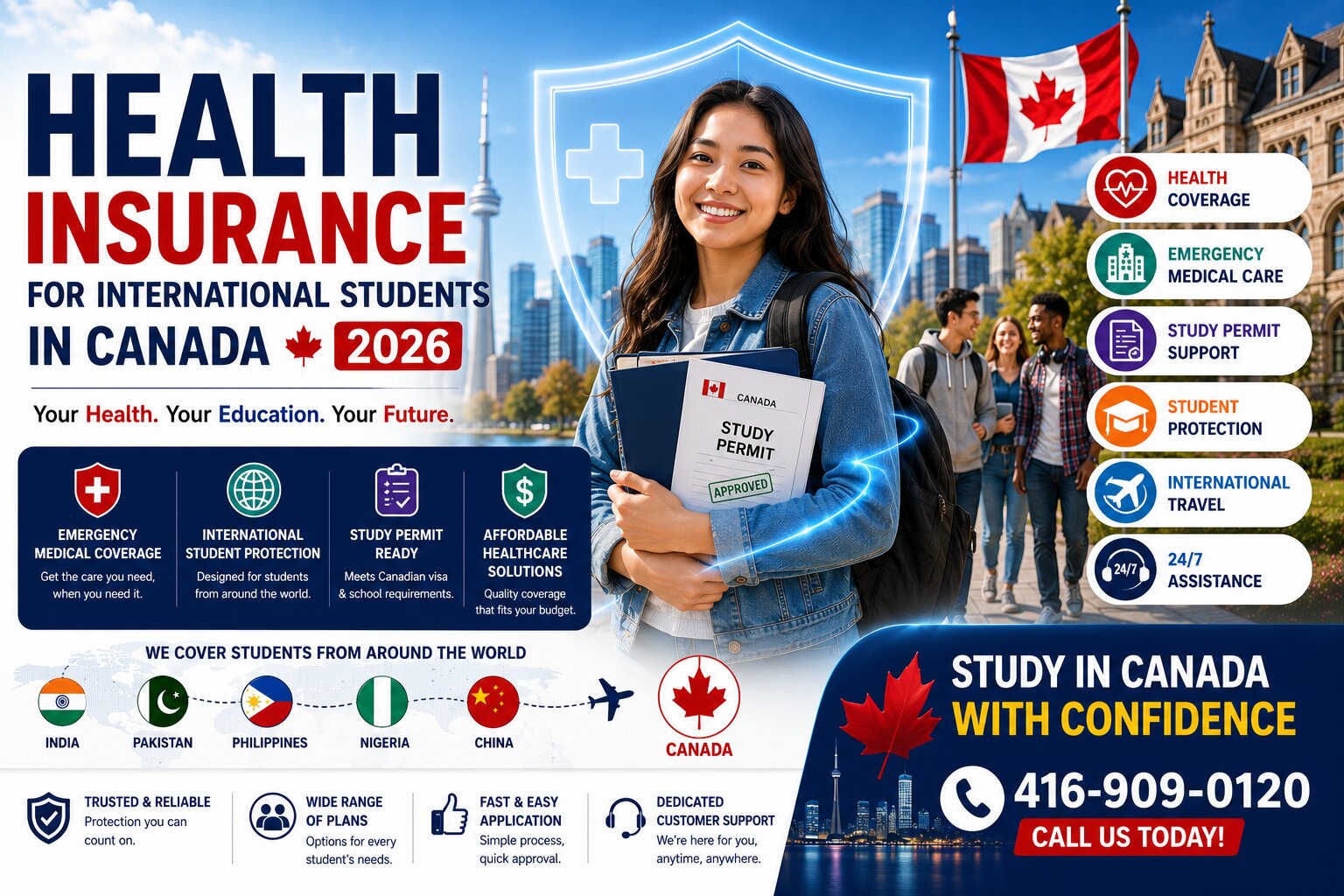
Health Insurance for International Students in Canada 2026
Introduction: The One Thing Every International Student in Canada Gets Wrong
You secured your study permit. You booked your flight. You found a place to live. But have you sorted out your health insurance for international students in Canada?
Most students assume Canada's famous universal healthcare covers them. It doesn't — not automatically, and not equally across every province. Getting this wrong can cost you thousands of dollars from a single doctor's visit or hospital stay.
In 2026, a single night in a Canadian hospital for an uninsured patient can cost over $3,700 CAD. An emergency appendectomy without coverage? Easily $20,000 or more. These are not hypothetical numbers — they are what uninsured international students actually face every year.
This complete 2026 guide to medical insurance for students in Canada covers:
Why Canada's healthcare does NOT automatically cover you
Province-by-province rules — the most important thing you need to know
Real 2026 costs from major Canadian universities
The two types of insurance every international student needs
Private plan options and monthly costs
How to avoid the most expensive coverage gaps
Whether you're coming from India, Nigeria, China, the Philippines, France, or anywhere else in the world — this guide gives you the exact information you need before you land.
The Truth About "Free Healthcare" in Canada
Canada's public healthcare system — called Medicare — covers Canadian citizens and permanent residents for medically necessary services. But "universal healthcare" does not mean free healthcare for international students.
Here's how the system actually works:
Provincially administered: Each of Canada's 13 provinces and territories runs its own health insurance plan with its own eligibility rules. There is no single national health card for international students.
Study permit ≠ automatic coverage: Holding a valid study permit does not automatically enroll you in a provincial health plan.
Province determines everything: A student at the University of Alberta may pay $0 for basic health coverage. A student at the University of Toronto pays $792/year for mandatory UHIP. A student in Quebec from most countries pays out-of-pocket for private insurance entirely.
What Medicare covers (for those who qualify):
Medically necessary physician visits
Hospital care (ward accommodation, nursing, diagnostics)
Emergency surgery
Medically required diagnostic tests
What Medicare does NOT cover (even for those who qualify):
Prescription drugs (outside hospital)
Dental care
Vision care
Physiotherapy and paramedical services
Ambulance fees
Mental health counselling beyond physician-level care
Private hospital rooms
This means every international student in Canada needs at minimum two layers of coverage: a primary health plan (provincial or university-administered) AND supplemental coverage for the gaps.
Province-by-Province Rules: Health Insurance for International Students Canada (2026)
This is the most critical section of this guide. Your entire insurance strategy depends on which province you study in.
🟢 Alberta — Best Coverage for International Students
Plan: Alberta Health Care Insurance Plan (AHCIP) Cost: Free (basic provincial coverage) Waiting period: None — eligible from arrival for study permit holders Requirement: Valid study permit; programs under 12 months may still qualify with a university letter confirming intention to stay 12+ months
Covers: Doctor visits, hospital stays, emergency care, medically necessary diagnostics Does NOT cover: Dental, prescriptions, vision, ambulance, physiotherapy
Supplemental plan needed: Yes — approximately CAD $300/year for extended health (dental, prescriptions, paramedical)
Total annual cost estimate: CAD $300/year (supplemental only)
Alberta is the most affordable province for international student health coverage in Canada.
🟡 British Columbia — Free But With a 3-Month Gap
Plan: Medical Services Plan (MSP) Cost: Free — BC eliminated MSP premiums in 2020 Waiting period: Balance of the month you arrive + 2 full months (approximately 3 months total) Requirement: Valid study permit for 6+ months; must apply immediately upon arrival
During the waiting period: You must have private health insurance. iMED (offered by UBC and SFU) costs approximately CAD $237 for the 3-month bridge period. Other private bridge plans from providers like Guard.me or Manulife average CAD $1.90–$2.50/day.
MSP covers: Doctor visits, hospital stays, emergency care, medically necessary diagnostics Does NOT cover: Dental, prescriptions, vision, ambulance (CAD $80 for BC residents; CAD $530 for out-of-province emergencies)
Important: MSP enrollment is mandatory for all BC residents. If you choose not to enroll, you must sign an opt-out form annually — and you cannot purchase private insurance within BC as a replacement.
Total annual cost estimate: CAD ~$237 (bridge) + CAD ~$350 (supplemental) = CAD ~$587/year
🔴 Ontario — No Provincial Coverage; UHIP Required
Plan: University Health Insurance Plan (UHIP) Cost: CAD $684–$792/year (approximately CAD $57–$66/month) — automatically billed with tuition Waiting period: None — UHIP begins from enrollment date Who administers it: Private insurer (currently Sun Life or Morcare), coordinated through Ontario universities
Ontario's public plan (OHIP) does not cover international students. This is the single most important fact for any student heading to Toronto, Ottawa, Waterloo, Hamilton, or any Ontario university or college.
UHIP covers: Doctor visits, hospital stays, emergency surgery, emergency care, diagnostic tests, specialist consultations — up to CAD $1,000,000 per policy year
UHIP does NOT cover: Dental care, vision care, prescription drugs outside hospital, ambulance fees, mental health counselling beyond physician care
Critical gap: Most Ontario domestic students under age 24 qualify for OHIP+, which covers prescription medications. International students in the same age group are excluded from OHIP+ entirely and must use their UHIP plan — which does not cover outpatient prescription drugs.
Opt-out window: 2–4 weeks after semester starts, if you have comparable private coverage
Supplemental plan needed: Yes — approximately CAD $350/year Total annual cost estimate: CAD $792 + CAD $350 = CAD $1,142/year
🟡 Quebec — Covered Only for Students from Agreement Countries
Plan: RAMQ (Régie de l'assurance maladie du Québec) Cost: Free (for eligible students) Eligibility: Only students from countries with a social security agreement with Quebec
Countries covered by the Quebec agreement (as of 2026): France, Belgium, Denmark, Finland, Greece, Luxembourg, Norway, Portugal, Romania, and Sweden.
Students from all other countries (including India, China, Nigeria, the Philippines, Brazil, Pakistan, and most of the world) are not eligible for RAMQ and must purchase private insurance for the duration of their studies.
Private insurance cost for ineligible students: CAD $1,000–$1,400/year (primary + supplemental)
🟢 Manitoba — Immediate Coverage, No Waiting Period
Plan: Manitoba International Student Health Plan Cost: No cost to eligible students Waiting period: None Covers: Emergency medical services, hospital stays, doctor visits, X-rays — mirrors the province's medically necessary coverage
Supplemental plan needed: Yes — for dental, prescriptions, vision
🟡 Saskatchewan
International students are generally eligible for provincial health coverage. Confirm eligibility and waiting period rules with your institution upon enrollment.
🔴 New Brunswick
International students are not covered under New Brunswick Medicare for most situations. Private insurance is required. Extended health coverage through your educational institution is strongly recommended.
Nova Scotia, Prince Edward Island, Newfoundland
Rules vary by province and institution. Nova Scotia allows students to transition into its medical service insurance benefits once residency requirements are met. Confirm with your institution before arriving.
The Two Types of Medical Insurance Every Student Needs
No matter which province you study in, most international students need two layers of coverage:
Layer 1: Primary Health Insurance
Covers the big-ticket items — emergency room visits, hospitalization, surgery, diagnostic tests, and doctor visits.
This comes from one of three sources:
Provincial plan (free, where eligible — Alberta, BC after waiting period, Manitoba)
University-administered plan (UHIP in Ontario, similar plans at other institutions)
Private international student plan (Guard.me, Manulife, MSH, etc. — for provinces without provincial coverage or during waiting periods)
Layer 2: Extended/Supplemental Health Insurance
Covers what Layer 1 doesn't — dental, prescriptions, vision, physiotherapy, mental health counselling.
This typically comes from:
Student union group health plan (offered at most Canadian universities — bundled with student fees)
Private supplemental plan (for students whose school plan has low limits or gaps)
School group plans typically cost CAD $200–$400/year and cover dental cleanings, prescription drugs, vision care, and paramedical services like physiotherapy and mental health. Check your school's plan details carefully — annual maximums for mental health counselling in particular are often low and can be exhausted by midwinter.
2026 Real Cost Breakdown: Medical Insurance for Students in Canada
University/Institutional Plan Costs (2025–2026 Rates)
Private Plan Monthly Costs (2026 Market Rates)
Full Annual Cost by Province (2026 Estimates)
What Does Medical Insurance for Students Actually Cover?
Here's exactly what to look for in a quality student health insurance plan in Canada:
✅ Emergency Medical Care
Hospitalization, emergency surgery, ICU care, ER visits, specialist consultations. This is non-negotiable — the absolute minimum any international student must have.
✅ Physician Visits
General practitioner and specialist visits. Walk-in clinics are fully covered under most plans and significantly faster than emergency rooms — use them for non-emergencies.
✅ Diagnostic Tests
Lab work, blood tests, X-rays, ultrasounds, and MRIs for medically necessary situations.
✅ Prescription Medications
Coverage varies widely. Basic plans may cover 70% of drug costs up to $500/year. Enhanced plans cover 90% up to $2,400/year. If you take regular medication, check the annual maximum carefully.
✅ Mental Health Support
A critical benefit in 2026. Campus counselling waitlists in major cities like Toronto and Vancouver can stretch months. Look for plans that include direct access to psychologists or telehealth counselling — not just physician referrals.
✅ Dental Care
Routine dental (cleanings, fillings) is not covered by any provincial plan. Basic supplemental plans cover 60–80% of routine dental up to $500–$750/year. A single root canal costs CAD $800–$1,500 without coverage.
✅ Vision Care
Eye exams and glasses/contacts. Basic plans offer $100–$150 every 2 years; enhanced plans offer $250 every 2 years.
✅ Medical Evacuation & Repatriation
If you suffer a serious illness or injury that requires specialized treatment or return to your home country, this benefit covers the cost. Without it, medical evacuation can cost CAD $15,000–$200,000.
✅ Ambulance Services
Often overlooked. Provincial plans have varying ambulance coverage — in BC, ambulance costs CAD $80 for residents but CAD $530 for out-of-province emergencies. Private plans typically cover ambulance in full.
The Coverage Gaps That Cost Students the Most
Even students who think they're covered often find gaps when it matters most. Watch for these:
Gap 1: The Provincial Waiting Period
In BC, the MSP waiting period is approximately 3 months. In Ontario, there is no provincial coverage at all. If you arrive without private insurance assuming coverage starts immediately, you are personally liable for every medical expense until your plan kicks in.
Solution: Purchase bridge coverage before you travel. iMED, Guard.me, and Manulife all offer short-term plans specifically for this gap.
Gap 2: UHIP Doesn't Cover Prescriptions
Ontario's UHIP covers medically necessary hospital services — but outpatient prescription drugs are excluded. A student with a chronic condition who needs monthly prescriptions faces this cost entirely out-of-pocket unless they purchase supplemental coverage.
Solution: Add a supplemental drug plan through your student union or a private insurer.
Gap 3: School Plans Exhaust Annual Maximums Mid-Year
Campus group plans often have low annual limits for mental health, physiotherapy, and prescriptions. Students who rely on regular counselling or ongoing medication can exhaust their plan by November or December.
Solution: Check your plan's annual maximums for each category before the semester starts. Supplement where limits are insufficient.
Gap 4: Study Permit Duration Limits Coverage
For students on short-term exchange programs of 6 months or less, eligibility for provincial plans may not apply. You must purchase a full private international student policy for the entire duration.
Solution: If your study permit is under 12 months, confirm your provincial eligibility before assuming you qualify for the public plan.
Gap 5: Health Insurance Ends With Your Permit
Your health coverage typically expires on the same date your study permit ends. If you're transitioning to a Post-Graduate Work Permit (PGWP), there can be a coverage gap of weeks or months.
Solution: Purchase interim private insurance to bridge the gap between your student plan ending and employer benefits beginning. Plans are available from CAD $1.90–$2.50/day.
5 Steps to Get the Right Health Insurance Before You Arrive in Canada
Step 1: Confirm Your Province's Rules
Before anything else, look up your specific province's eligibility rules for international students. Know: Is there a waiting period? Are you eligible for the provincial plan? What does your university automatically enroll you in?
Step 2: Check Your University's Automatic Enrollment
Most major Canadian universities auto-enroll international students in a health plan and bill the premium with tuition. Confirm this before purchasing private coverage to avoid paying twice.
Step 3: Identify the Gaps in Your Primary Plan
Every primary plan (UHIP, MSP, AHCIP) has gaps — dental, prescriptions, vision, mental health. List what's missing and what it costs in your province.
Step 4: Purchase Supplemental Coverage for the Gaps
Your student union plan is typically the most cost-effective way to fill gaps. If it has low annual limits, supplement with a private plan for the specific categories where you need more coverage.
Step 5: Get Insured Before You Travel
For provinces with waiting periods (BC) or no provincial coverage (Ontario), purchase private bridge insurance before your departure. Don't arrive uninsured even for a single day.
Working with a licensed Canadian insurance advisor at no cost makes this process significantly faster and ensures you don't miss any coverage gaps specific to your situation.
Who Needs Private Medical Insurance for Students in Canada?
You definitely need private medical insurance if you are:
Studying in Ontario (no OHIP for international students — UHIP is mandatory but has gaps)
Studying in Quebec and your home country has no agreement with Quebec
Studying in New Brunswick (private insurance required)
On a study permit shorter than 12 months in BC or Alberta
Arriving in BC before MSP kicks in (3-month bridge gap)
A dependent of a student — each dependent needs their own individual coverage
On a short-term exchange of 6 months or less (usually ineligible for provincial plans)
A graduate transitioning to PGWP (gap between student plan and work benefits)
You may need only supplemental insurance if you are:
Studying in Alberta on a 12+ month permit (AHCIP covers you; supplement for dental/prescriptions)
Studying in Manitoba (provincial plan covers basics; supplement for extras)
Studying in BC after the waiting period (MSP covers basics; supplement for extras)
Why International Students in Ontario Are the Most Vulnerable
Ontario is home to Canada's largest concentration of international students — University of Toronto, Waterloo, Western, McMaster, Queen's, and hundreds of colleges. Yet it has the most complex insurance situation.
In 2022–2023, more than 256,000 international students lived in Ontario, contributing $16.9 billion to Canada's GDP. Despite this enormous economic contribution, international students are excluded from OHIP and must navigate a fragmented private insurance system.
The key problems:
UHIP covers primary medical but not prescriptions or dental
Providers often ask international students to pay upfront before treatment because not all providers accept UHIP directly
Students excluded from OHIP+ miss out on free prescription drug coverage that Canadian students under 24 receive automatically
Campus group plans have annual caps that run out mid-year for students with higher health needs
The practical fix: UHIP as your primary plan + a student union supplemental plan + a private plan for prescription drugs if you take regular medication.
How to Choose the Right Medical Insurance Plan as an International Student
Use this checklist when comparing plans:
Frequently Asked Questions: Health Insurance for International Students Canada
Q: Does Canada provide free health insurance to international students?
No. Canada's universal healthcare system covers Canadian citizens and permanent residents. International students may access provincial coverage in some provinces — but rules, waiting periods, and eligibility vary by province. In Ontario, international students are never eligible for OHIP and must use UHIP instead.
Q: What is UHIP and do I have to pay for it?
UHIP (University Health Insurance Plan) is a mandatory private health insurance plan administered through Ontario universities. All full-time international students at Ontario universities are automatically enrolled. The 2026 cost is approximately CAD $684–$792/year, billed with your tuition. It covers medically necessary hospital and physician services but not dental, outpatient prescriptions, or vision.
Q: Is health insurance mandatory for international students in Canada?
While the federal government does not legally mandate private health insurance for all study permit holders, most universities require proof of coverage as a condition of enrollment, and many provinces require you to register for their health plan upon arrival. Being uninsured is a serious financial risk — a single hospital visit can cost thousands of dollars.
Q: What health insurance do I need if I'm studying in British Columbia?
You must apply for MSP immediately upon arrival. There is a waiting period of approximately 3 months before coverage begins. During this period, purchase private bridge coverage — iMED (~CAD $237) or equivalent from Guard.me or Manulife (~CAD $1.90–$2.50/day). After MSP begins, add a supplemental plan for dental, prescriptions, and vision.
Q: How much does medical insurance for students cost in Canada in 2026?
Costs range from CAD $300/year (Alberta — supplemental only, as AHCIP is free) to CAD $1,400/year (Quebec or New Brunswick — full private coverage). Ontario students typically pay CAD $1,100–$1,200/year combining UHIP and supplemental. Private plans start at approximately $62/month for a basic Sun Life plan.
Q: Does student health insurance cover mental health in Canada?
Some plans do — and coverage has improved in 2026. Extended health and supplemental plans typically include a set number of psychologist visits (10–15/year) or telehealth counselling sessions. Campus clinic waitlists in major cities can run months long, so a plan with direct telehealth access is worth prioritizing.
Q: What happens to my health insurance after I graduate?
Student and university plans typically end at graduation. Provincial coverage continues for doctor and hospital visits, but supplemental coverage (dental, prescriptions, mental health) stops. If you're transitioning to a PGWP, there may be a gap before employer benefits begin. Purchase interim private insurance to bridge this period.
Q: Can I be covered under my university plan if I transfer schools?
University health plans (like UHIP) are tied to your specific institution. If you transfer, you will be enrolled in the new institution's plan. Private individual plans are portable — they follow you regardless of where you study or if you move provinces.
Q: Does health insurance cover pre-existing conditions for international students?
Many plans do cover stable pre-existing conditions — typically conditions that have been stable for 90–180 days before your policy start date. Always declare your conditions fully on your application. Failure to disclose can void your entire claim, even for unrelated medical events.
Get Expert Help Navigating Health Insurance for International Students in Canada
Canada's provincial patchwork of health insurance rules is genuinely complex — and getting it wrong is expensive. A licensed insurance advisor who knows the 2026 rules can find the right plan for your specific province, program length, and health needs — usually at no extra cost to you.
✅ Licensed Financial Advisor — 6+ years in Canadian insurance
✅ Deep expertise in international student coverage across all provinces
✅ Access to multiple insurers — not locked to one company
✅ Free consultation — personalized to your study permit, province, and health situation
✅ Fast coverage — get insured before you land
📞 Call: +1 416-909-0120 🌐 Free Quote: travelersinsurances.ca/student-travel-insurance-canada
Conclusion: Don't Land in Canada Without This Sorted
Health insurance for international students in Canada is not a formality — it is a financial necessity. The rules differ by province, the costs vary dramatically, and the gaps in coverage are real and expensive.
The bottom line for 2026:
Alberta: AHCIP is free from arrival — you need supplemental only
BC: MSP is free but has a 3-month gap — buy bridge coverage first
Ontario: OHIP doesn't cover you — UHIP is mandatory and gaps require supplemental
Quebec: Only covers students from 10 specific countries — most need private insurance
Manitoba: Immediate coverage — supplement for extras
New Brunswick: Full private insurance required
Know your province. Know your gaps. Buy coverage before you arrive.
👉 Get your free international student insurance quote — TravelersInsurances.ca
Disclaimer: This article is for informational purposes only and does not constitute insurance, legal, or immigration advice. Provincial health insurance rules, eligibility criteria, and costs are accurate as of June 2026 but are subject to change. Always verify current requirements with your institution and provincial health authority before purchasing coverage. Speak with a licensed insurance advisor for recommendations specific to your situation.